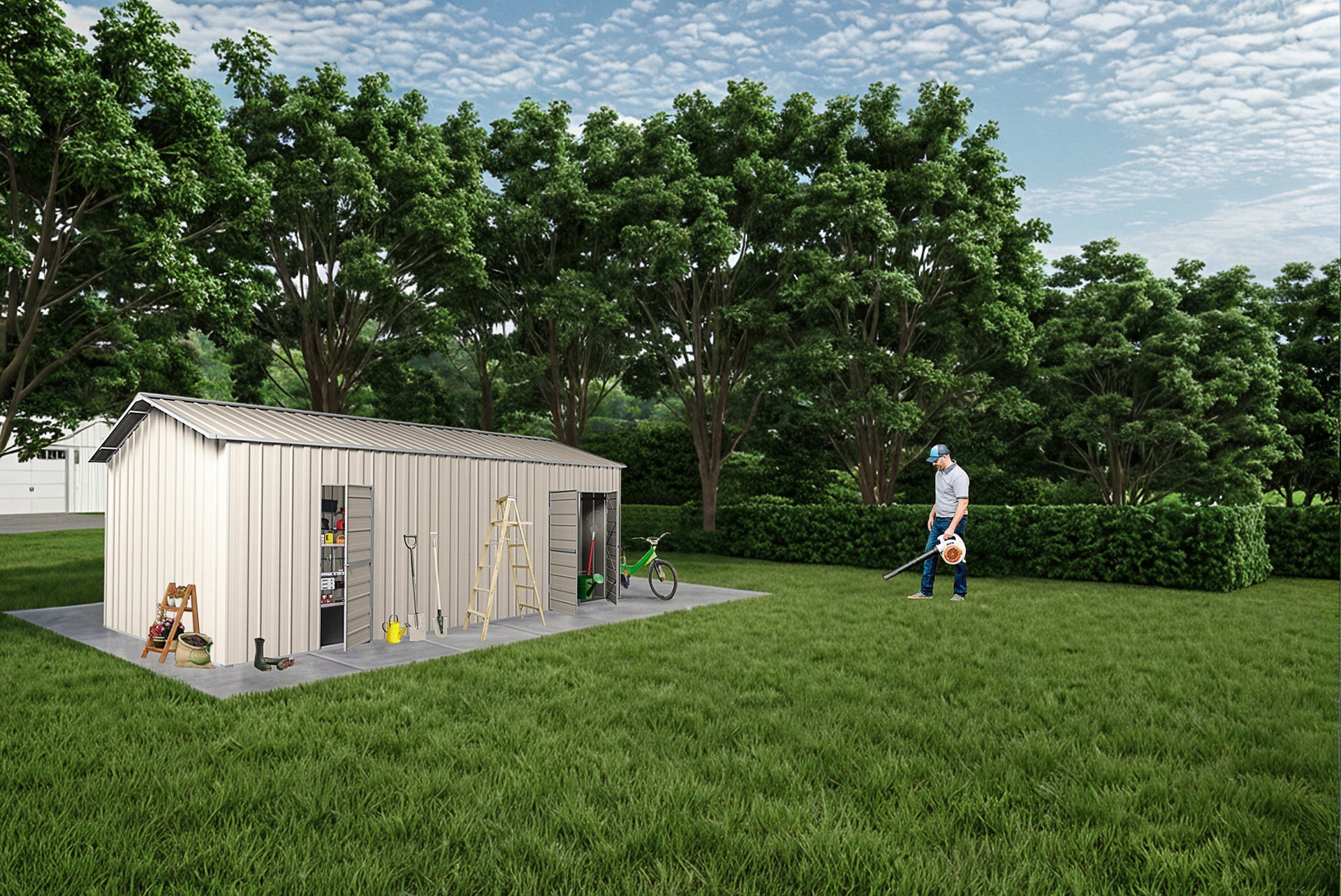
A garden shed is such a common fixture in people's backyards for one, good reason. They're handy. Depending on the person a garden shed can be anything from a workshop, or a storage space. Depending on how frequently you access your shed and what you do with it, a key aspect of its presence in your backyard will be where exactly you place it. Most people don't want to break up the usability of their garden by placing their shed smack-dab in the middle of the garden, so generally people put them up against a wall or fence. However, even with this limitation, there are still some things to know about where you're putting your shed.
Why Does Shed Placement Matter?
There are a couple of major reasons that your shed placement really matters, the first being local laws. Depending on where you live, your local council will have rules stipulating where your shed can legally be. These should always be the first consideration when placing your shed, as these laws aren't just designed to be a pain in the backside, they're there to keep your (and your neighbour's) property functional.
If you're placing a shed next to a wall or fence, rain runoff (or if the activity you use your shed for produces a lot of condensation) then the excess moisture can encourage the growth of rot, mold, or moss. These can damage the structural integrity of any walls or fences near to your shed, as well as the shed itself. Additionally, it can encourage vermin like cockroaches and mice or rats to congregate - negatively affecting yours and your neighbour's homes, and your shed.
Before you go placing your shed, be sure to have a copy of your local laws concerning sheds on hand. Ideally, it would help to have this before you purchase the shed, as some state's laws can change depending on the height of the shed and other factors.

Wall Vs Fence Placement: What's the Difference?
Despite being a functionally similar concept, it's important to remember some key things.
Firstly, placing a shed against or near the wall of your house might seem like a good idea. However, some key problems with that is that eventually, there may be some maintenance needed on either your house or your shed. If the area that needs tending to is that part that is parallel to your house, the limited spacing can present significant difficulty in any repair or cleaning efforts. Additionally, if you try to attach your shed to your house, should your shed become invaded by vermin, its proximity to your home gives them a direct means of ingress to your dwelling.
Likewise, although a fence may seem a good alternative, this presents issues of its own. Similar to wall placement, putting your shed in close proximity to a fence can make maintenance and repairs difficult because of the space limitations. Additionally should any wood eating or habitating insects take up residence in the fence, they may migrate to your shed and damage your tools and worksurfaces.
Like we said earlier, moisture and runoff from a shed can also have detrimental effects on your wall or fence, either rotting, or promoting mold or moss growth, which brings its own host of issues.
Regardless of which you choose, the fact is that placing a shed in your backyard is an issue of accessibility vs local council laws vs how much work you're willing to do to keep your wall and/or fence clean and structurally sound.
What Role Does Garden Shed Size Have?
Depending on the size of your garden shed, certain local councils may have different laws regarding how close your shed can be to a wall or fence. For example in Queensland, placing sheds on the boundary or against an existing fence typically requires a minimum 1.5 meter side setback if the shed exceeds 10 square meters or 2.4 meters in height. Different shed heights have different regulations.
Not to mention a certain practicality to consider. After all, if your backyard is a total of 15 meters square, having a 10 meter square shed would take up two thirds of your garden space. Not very practical having most of your space taken up by a shed.

Basic Considerations
This all comes down to a few simple questions to ask yourself. Like anything, putting a garden shed in your yard is two parts preparation, one part execution. So when getting ready to place your garden shed in your space, be sure of the following things:
What are the local laws?
Your local council will have laws and regulations around the presence of structures like sheds on people's property. Make sure you're familiar with these before you go shopping around and planning where to put your shed.
What do you need the shed for?
Not only will this determine whether or not you actually need a garden shed or not, but it will determine what kind of shed you buy, and what is actually on the market that will fit your council regulations.
How much garden space do you have/will you lose after placing the shed?
This is where getting out the measuring tape is handy. After looking at your council regulations, take to your yard with a measuring tape and a bit of paper and a pen, sketch out the available space, marking out council-stipulated boundaries, and then see where your shed can fit within that. When you see a scale-mock up of your garden and its spatial relationship to the shed, it will answer a lot of questions.
Will your considered placement cause maintenance issues for your wall, fence, or shed?
All things break down over time, which means you're going to have to eventually do some repair and/or maintenance on your wall, fence, or shed. Remember to make access a priority when placing your shed so that this work doesn't become too much of a hassle in the future.
Regardless of what you choose, it's always best to consult with an expert. To get the most out of your shed, it may be worth asking one of the experts at Space Sheds, an Aussie shed retailer with years of experience in the field. We offer a wide range of sheds, carports, storage solutions, and more. Simply contact us here, or call us on 1800 960 901.