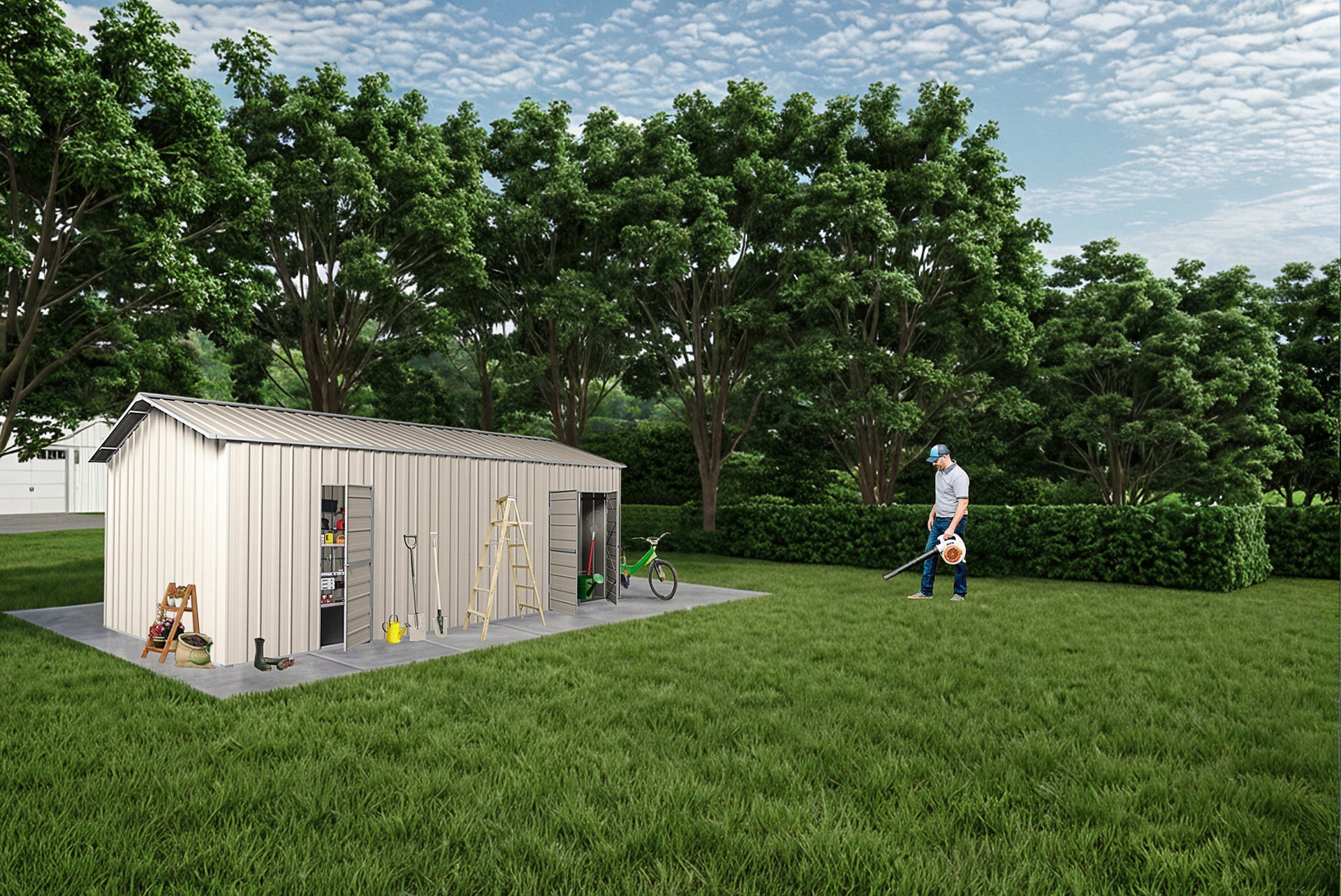
Many gardeners value their garden shed, sanctuary for tools, seeds, cuttings, and other equipment necessary to maintain their green haven all year round. However, do small gardens need any less tools or equipment? Although they might have a different scale of work, the reality is that small gardens still require a lot of the same tools and equipment to be properly cared for. It stands to reason then, that if a small garden requires the same tools, that small garden sheds provide the answer to storage that small garden owners may seek.
Placement
Small garden sheds are no more or less important to the career or dedicated hobbyist gardener than those with larger sheds, though it can be difficult to find the optimum space to put it, and know how to capitalise on the more limited space within your shed.
The first thing to consider is what the stipulations and standards are for residential properties to build in their yards. Local councils have strict rules designed to protect everyone from having their properties encroached on, or having one person's poor planning decisions negatively affecting the quality of their neighbour's residence. So before you go buying a shed and setting it up in your garden, make sure you get a copy of your local construction laws handy, measure up your available space, measure the potential sheds you might purchase, and with all the data make sure that your shed is not only practical, but legal as well.
Once you've made sure everything is legally sound, it's important to know where you can place your shed. Now assuming everything follows your local laws, a small garden shed can reasonably be placed anywhere in your garden.
However, because your garden is already small, you may want to put your shed up against a wall or fence, which has its own merits as well as its own drawbacks. Building against a wall or fence can limit access to the back of the shed, meaning that should you need to perform maintenance on the wall of your house or that area of fence, it can be a difficult undertaking. Additionally, if you decide to attach your shed to your house as an additional room, you have to be prepared to ensure that you're undertaking all possible vermin-proofing methods, otherwise the bugs and rodents that have a habit of seeking out garden sheds for shelter during winter can then further migrate into your home.
Most people place their garden sheds near a wall or fence, while still allowing for a comfortable amount of walking and working space between the wall and shed. However, in smaller gardens this can encroach on the amount of workable space you have. Corners can provide a handy answer to this, as it fits the right angles of typical shed walls, allows you to make the most of your garden space, and building away from the wall to allow maintenance access won't invade the garden expanse too much.
Storing and Arranging your Small Shed
Gardeners with larger sheds definitely have an easier time of making actual use of their shed. The bigger space means that storage and usage are rarely an issue, and maybe they can even get a workbench in there for extra shelving and tool storage, as well as a raised work surface. Small sheds have more of a premium on their space, but that doesn't mean we can't leverage that space to more effectively use what we've got.
The following are time tested tips and tricks for making the most of small garden sheds:
Bigger Stuff Goes Outside
It might seem a bit weird, and obviously is subject to how small your shed is, but several gardening tools are quite large. For example, shelves and work benches are handy, but if you've got a 2 metre shed and 1 metre bench, that's half of your shed space being taken up by a bench. And maybe that's functional for you, maybe there's enough room left in your shed for you to store bags of potting mix or fertiliser, and all the rest. But maybe your shed is exactly 1 metre, or less.
When this is the situation it's important to be strict about what your shed can-can't be used for. Your shed might have to be relegated to storage space, rather than storage and work space. Therefore when it comes to the larger items, shelving, benches, or anything similar, it may be worth dedicating a different portion of the garden to this kind of accoutrement. If you have an undercover area like a deck or a garage, it may be worth using this area as your workspace for propagating cuttings, maintaining tools, constructing planter boxes, and more, rather than making your shed the space where these activities happen.
Use Your Corners For Long Stuff
The corners of your shed aren't where you should be storing your bags of soil or your tools. But rather stuff like your mower, whipper-snipper, garden broom, hoe, shovel, and other similar elongated tools and equipment. This leaves the walls able to be capitalised on through their unique feature, their verticality.
Using Your Walls as Vertical Storage
Similar to how garden walls allow people to install pot hangers or trellises to create vertical gardens, the walls of your shed can be used to create a vertical storage space for your tools. Installing a peg board is a relatively cheap and easy way to capitalise on the space in your shed, and once installed you'll have a fully customisable storage solution. However, some people go even simpler, opting to just screw in a piece of wood onto their shed wall, and creating their own pegs by either partially hammering in nails or screwing in screws.
This all depends on the amount of available space you have in your shed, and what exactly it is that you want to store in it. But the beauty of having a garden shed isn't just the ease of use, but it's the fact that you can do whatever you want with it.